





LSD Shows Anti-Cancer Potential in New Study — Without the Trip
Scientists discover that activating a serotonin receptor with LSD can strengthen the immune system’s ability to attack colorectal cancer
A surprising new study published in Cell has put LSD back into the scientific spotlight — this time not because of its psychedelic effects, but because of its potential impact on the immune system and cancer.
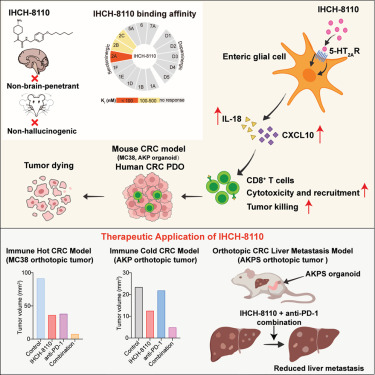
Researchers found that lysergic acid diethylamide (LSD) can enhance the ability of the immune system to attack tumors by activating a serotonin receptor known as 5-HT2A. The research focused on colorectal cancer and found that this pathway increased the activity and infiltration of cancer-fighting CD8+ T cells.
But there is an important distinction: the researchers have not shown that taking LSD cures cancer in humans.
Instead, the study points toward a completely different possibility — using the biological mechanism triggered by LSD to develop new cancer treatments without producing the psychedelic experience.
LSD and the immune system
LSD is best known for its powerful effects on perception, consciousness and sensory processing. Those effects are largely associated with its interaction with serotonin receptors, particularly the 5-HT2A receptor.
The new research suggests that this receptor may have another role that is highly relevant to cancer biology.
According to the researchers, activating peripheral 5-HT2A receptors with LSD enhanced CD8+ T-cell-mediated antitumor immunity. CD8+ T cells are part of the immune system’s defense machinery and can recognize and destroy abnormal cells, including cancer cells.
In mouse models of colorectal cancer, LSD treatment promoted greater infiltration of CD8+ T cells into tumors and produced an anti-tumor effect. The researchers therefore began investigating whether it was possible to separate the useful biological effect from LSD’s psychedelic properties.
The fascinating part: removing the psychedelic effect
This is where the research becomes particularly interesting.
Rather than suggesting that cancer patients should take LSD, the researchers explored compounds designed to target the same biological pathway while avoiding the central nervous system effects responsible for hallucinations.
One of the compounds investigated was IHCH-8110, a non-hallucinogenic approach designed to target the peripheral 5-HT2A receptor pathway.
The concept is similar to what researchers are trying to accomplish with other psychedelic-inspired medicines: identify the biological mechanism responsible for a potentially useful therapeutic effect and reproduce it without necessarily producing the full psychedelic experience.
In other words, scientists aren’t necessarily interested in giving cancer patients a psychedelic trip.
They are interested in asking:
What if the molecule that makes LSD psychedelic isn’t the part that helps the immune system fight cancer?
Why CD8+ T cells matter
Cancer cells are not always easy for the immune system to recognize and destroy. Some tumors create an environment that suppresses immune activity or prevents sufficient numbers of immune cells from entering the tumor.
CD8+ T cells are particularly important because they can directly kill cells displaying abnormal or tumor-associated antigens.
This has become a major focus of modern cancer immunotherapy. Other research has already shown that manipulating immune pathways can increase CD8+ T-cell infiltration and improve anti-tumor responses. For example, studies involving LSD1 — a completely different molecule from psychedelic LSD — have demonstrated that inhibiting LSD1 can increase immune-cell infiltration and enhance anti-tumor immunity.
The new Cell study adds another potential pathway to this rapidly expanding field.
Does LSD cure cancer?
No — at least not based on the evidence currently available.
This distinction is extremely important.
The new research provides evidence of an anti-tumor mechanism in preclinical models of colorectal cancer. That is very different from demonstrating that LSD can cure cancer in humans.
A successful result in mice does not automatically translate into an effective or safe human treatment. Researchers still need to establish appropriate dosing, safety, effectiveness, pharmacology and whether the same mechanism works reliably in human patients.
So the headline shouldn’t be:
“LSD cures cancer.”
A much more accurate interpretation is:
“Scientists discovered that activating a serotonin receptor targeted by LSD can enhance anti-tumor immunity in colorectal cancer models.”
That is still a remarkable finding.
Psychedelics are entering a new era of medical research
The study is part of a much broader shift in psychedelic science.
For decades, LSD and other psychedelics were primarily associated with altered states of consciousness. Today, researchers are increasingly interested in their effects on serotonin signaling, neuroplasticity, immune pathways and other biological systems.
Importantly, this doesn’t mean every therapeutic effect of a psychedelic requires the psychedelic experience itself.
Scientists are increasingly investigating psychedelic analogues and compounds that reproduce selected molecular effects without producing hallucinations.
That could potentially make psychedelic-inspired medicines easier to administer and develop as conventional pharmaceutical treatments.
What happens next?
The next major question is whether this mechanism can eventually be translated into human cancer treatment.
For now, the evidence remains preclinical. The researchers have demonstrated an intriguing connection between 5-HT2A receptor activation, CD8+ T-cell activity and tumor suppression, but clinical trials will be necessary before anyone can determine whether the approach is safe and effective in people.
And that may ultimately be the most exciting aspect of the discovery.
The future treatment might not be LSD at all.
It could be a new class of medicines inspired by LSD’s biology — keeping the molecular pathway that helps the immune system while leaving the psychedelic experience behind.
The psychedelic molecule may have more biological secrets left to reveal
LSD has spent decades being studied primarily for what it does to consciousness. Research like this suggests that scientists may only be beginning to understand the full range of biological systems influenced by psychedelic compounds.
For cancer research, the important question is no longer simply whether psychedelics can change the mind.
It is whether the same molecular machinery that changes the mind can also help the immune system change the fate of a tumor.
And according to this new research, that possibility deserves a much closer look.